
10 Mar
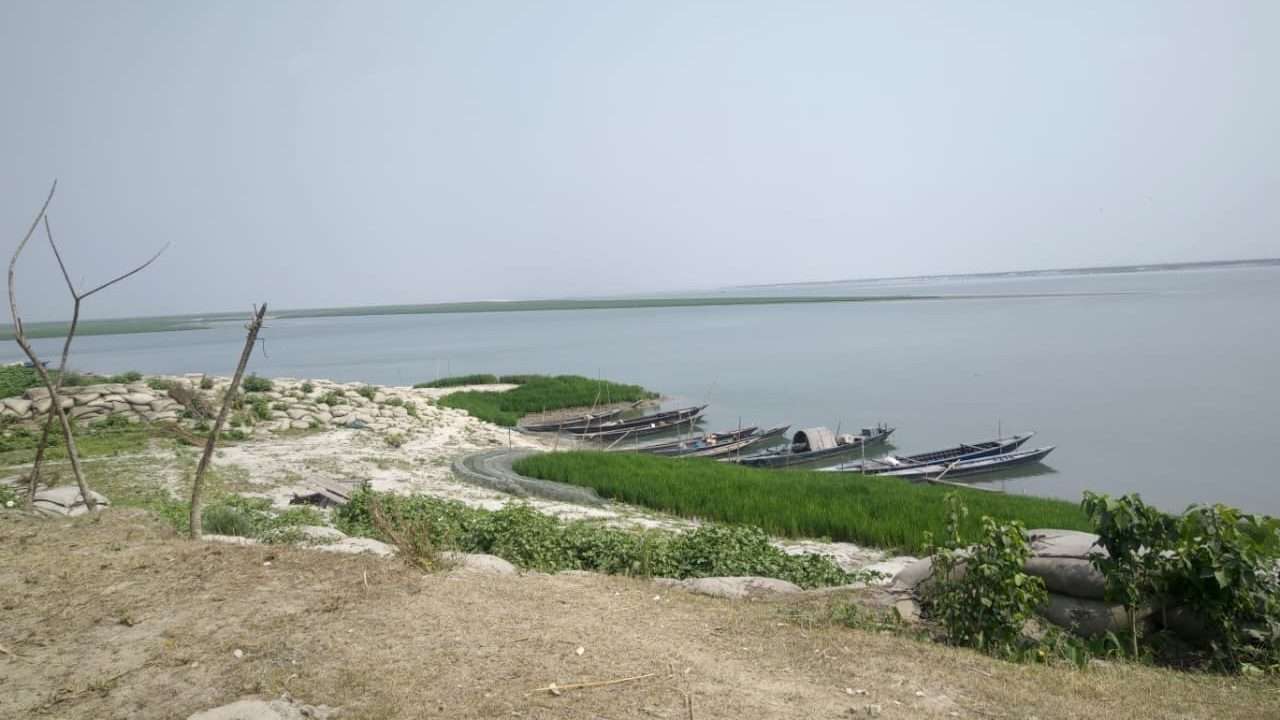
The Land That Walks: There is a place where the earth is not a foundation but a fragile guest of the river. It is called Barodul Char, a sliver of land in the vast throat of the Jamuna in Bangladesh. Here, the water does not simply flow beside you; it waits. It watches. It remembers that this land was once its own. For forty years, people have made a life on this borrowed shore. They are the climate’s pilgrims, families washed from their homes by the hungry river, who found here a final, trembling refuge. Thirty thousand souls now call this shifting silt home, a town built on hope and hazard. They buy and sell this land as if it were permanent, though everyone knows permanence is a lie the river tells the land.
Last year, during the month of Ashwin, as the village celebrated with a boat race on the water, the river reminded them who was in charge. It came in the night, not as a flood but as a collapse. The earth simply gave way. Twenty homes were swallowed whole by the darkness. Families fled into the night wearing only their sleep. A single brass plate, a handful of gold jewelry, a lifetime of savings—all returned to the mud from which they came. Livelihoods, harvested rice, a beloved cow—gone. The river does not plunder; it simply reclaims.
Since the great bridge was built upstream, the floods have grown gentler, and the people have dared to dream. They plant their crops and their futures in the same damp soil, believing that if the water can be merciful, perhaps the world beyond might finally see them.

But the greatest isolation is not from the river; it is from each other and from the nation. Barodul Char has no roads. There is not a single path wide enough for a cart, a rickshaw, or a boat. To move is to walk. To walk is to live. A mother in labor is carried for hours on a stretcher of woven reeds, her journey a slow, swaying procession across endless sand. Men with motorcycles are like mythical heroes, paid whatever a family can gather to race a dying father to a distant clinic that may or may not have medicine. The journey to the Upazila, a distance a car could cross in minutes, takes half a day on foot. In the monsoon, the sand turns to deep, sucking mud, and walking becomes a war.
This isolation is a silence that swallows everything. There is a health center, but it is as distant as a star, forever sinking closer to the river’s edge. There are government schemes, but news of them travels no faster than a man can walk, which is to say it rarely arrives at all. Information, like dignity, is a luxury for places the world has bothered to connect.
Barodul is a story of a remote piece of homeland for many climate-vulnerable citizens without a single road. It is a place where life is measured not in miles but in the hours it takes to walk them. And in every step its people take across the shifting sand, there is a quiet, desperate prayer: that one day, the world will come to meet them.
This Field Story was authored by Md. Naushad Alam, portfolio lead at Inspira Advisory & Consulting Limited. For any inquiries, reach out to naushad.alam@inspira-bd.com.