
31 3 月
The Strategic Question
The global semiconductor supply chain exceeded $630 billion in 2024 and is projected to reach $791.7 billion in 2025, a record high representing a 25.6 percent year-on-year increase [1] [2]. Back-end assembly and testing alone, the Outsourced Semiconductor Assembly and Test (OSAT) segment, is valued at approximately $47 billion in 2025, with projections ranging between $58 billion and $80 billion by 2030 [3]. These are markets wide open amid US-China decoupling and the global push to diversify supply chains away from concentrated nodes in East Asia.
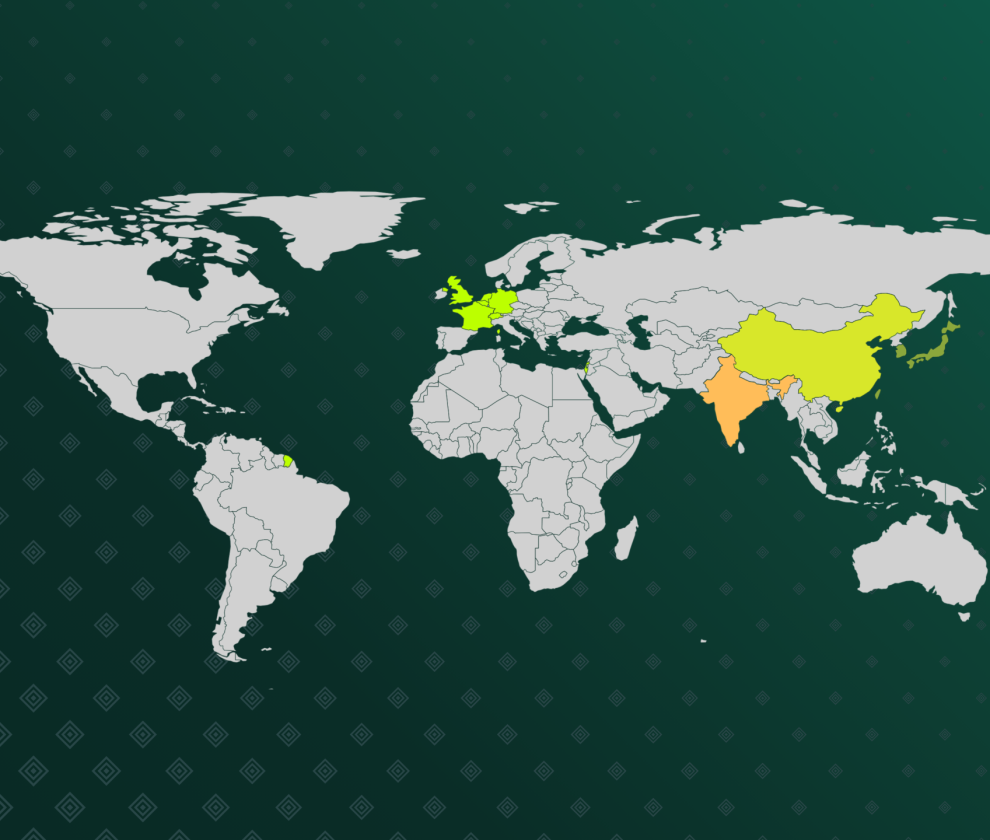
Bangladesh does not need to replicate Taiwan, South Korea, or the United States. But it does need a precise understanding of how comparable Asian economies carved credible footholds into the semiconductor value chain, not through grand ambition, but through disciplined, sequenced strategy. The four economies most instructive to Dhaka are Vietnam, Malaysia, India, and China: each representing a different pathway into a market many assume is permanently closed to latecomers.
What follows is not a survey of their semiconductor journeys. It is a comparative analysis, an effort to extract from each experience an actionable lesson for Bangladesh, honest about trade-offs and focused on sequencing rather than aspiration.
The Central Mechanism: One Self-Reinforcing Cycle Beats a Hundred Disconnected Initiatives
Beneath each country’s success runs the same structural mechanism: the flywheel. In semiconductor strategy, a flywheel is the self-reinforcing cycle through which an early advantage compounds into a durable industrial position. Governments and companies train workers, which attracts an anchor firm. That firm helps create export proof points, drawing in suppliers and deepening the ecosystem’s credibility. As the ecosystem strengthens, it attracts more investment, which in turn fuels further growth. The loop continuously tightens, reinforcing itself over time.
What distinguishes these regional successes is not that they invested more, or enjoyed better geography. It is that each country found one flywheel and built around it with discipline. Vietnam mapped labour mobility. Malaysia mapped supplier clustering. India mapped IP capture. China mapped scale. Bangladesh’s challenge is precisely this: identify one viable flywheel and compound it deliberately.
Vietnam: The OSAT Pivot Built on an Existing Assembly Base
Vietnam’s semiconductor sector is projected to reach $16.5 billion by 2030, according to Mordor Intelligence, though broader estimates of semiconductor-related revenue already reached $18.7 billion in 2024 when the output of FDI-driven electronics firms like Samsung and Intel is included [4] [5]. The critical insight is that Vietnam’s semiconductor success was not a leap from nothing. It was an extension of an existing electronics assembly industry that already generated $126.9 billion in exports in 2024, representing one-third of the country’s total exports [6].
The anchor investment was Intel’s Ho Chi Minh City facility, but the timeline is important to get right. Intel first invested $300 million in Vietnam in 2006, with construction beginning in 2007 and operations commencing around 2010 [7]. The cumulative investment reached $1.5 billion over nearly two decades, not a single expansion event. This distinction matters because it reveals the patient, compounding nature of the flywheel: Intel did not arrive with $1.5 billion on day one. It scaled incrementally as Vietnam demonstrated workforce readiness and operational reliability.
Vietnam’s advantage was not only labour cost. It was labour adaptability. A TSMC supplier executive noted at a 2023 industry forum that textile workers could be retrained for chip assembly within 18 months because they already carried production discipline. The government built around this with a national vocational initiative targeting 50,000 semiconductor workers by 2030, alongside a 14 percent corporate tax rate and four-year tax holidays for semiconductor projects. Samsung expanded testing operations. Qualcomm set up design verification centres. Amkor committed $1.6 billion to a Vietnamese campus.
However, a critical caveat applies. Research from RMIT University has shown that Vietnam’s electronics growth has occurred largely “without spillovers,” meaning foreign-invested firms dominate the high-tech sector with limited domestic technology transfer or productivity gains for local firms [8]. The lesson for Bangladesh is therefore twofold: workforce investment attracts FDI, but without deliberate mechanisms for technology transfer, the country risks becoming a platform for foreign operations rather than building indigenous capability.
Malaysia: Building a Cluster That Became a Fortress
Malaysia’s semiconductor story shows what happens when foreign investment stays long enough to transform the surrounding ecosystem rather than merely occupy it. The Penang Free Trade Zone, established in 1972, represents over fifty years of deliberate ecosystem building [9]. By the 2000s, the Bayan Lepas Free Industrial Zone alone was home to over 350 multinational companies, including Infineon, NXP, and Intel [10].
Malaysia’s government required something in exchange for market access: local economic participation. Under Multimedia Super Corridor (MSC) status, firms received pioneer tax holidays offering a 70 percent statutory income exemption for up to five years and zero percent tax on reinvested profits, alongside 5 to 10 percent equipment and materials rebates [11]. Crucially, these incentives were tied to local content targets. That conditionality triggered the rise of a domestic supplier base. Penang SMEs began producing bond-wire frames, solder materials, and test fixtures, unglamorous but strategically essential inputs. Many became “hidden champions,” earning $10 to $50 million annually and deeply embedded in global supply chains.
Unisem, often cited as a Malaysian success story, recorded revenue of approximately 1.29 billion Malaysian Ringgit in 2020, which translates to roughly $307 million USD at prevailing exchange rates, not the $1.3 billion figure sometimes reported due to a currency conversion error [12]. While this is a more modest figure, it still represents a significant domestic OSAT player that emerged directly from Malaysia’s conditional incentive framework. Malaysia now targets 30 percent local content in advanced manufacturing sectors in Selangor.
The lesson is not about copying Malaysia’s incentive levels. It is about copying its incentive logic: structure FDI benefits to shape investor behaviour, not merely reward capital announcements.
India: Capturing Value Without Building Fabs
India holds roughly 20 percent of global semiconductor design talent, an estimated 125,000 engineers working across chip architecture, verification, and IP development, with almost no fabrication capacity [13]. That combination turned out to be a strategic positioning, not a weakness: India built semiconductor relevance precisely by not chasing fabs.
The 2008 to 2010 financial crisis provided unexpected momentum. Indian engineers laid off at Intel and Xilinx returned to Bengaluru and Hyderabad and launched fabless startups. Government IP vaulting mechanisms gave these startups subsidized foundry access, enabling chip tape-outs without full foundry economics. The 2021 Design-Linked Incentive (DLI) scheme reinforced the model, offering 10 to 15 percent rebates on exported design services, rewarding IP creation rather than physical output. The DLI scheme has supported over 15 chip design companies and enabled 16 tape-outs, while training approximately 1,000 specialized engineers through DLI-linked projects [14].
A critical clarification is necessary regarding India’s projected semiconductor market size. The frequently cited $110 billion figure for 2030 refers to India’s semiconductor demand and consumption, not domestic production or design services revenue. As the MeitY Secretary stated, “India’s semiconductor demand, currently at $45 to $50 billion, is expected to reach $100 to $110 billion by 2030” [15]. This is the value of chips India will consume, largely through imports, not what its design industry will produce. The distinction is essential for any country using India as a benchmark.
For Bangladesh, India reframes the question. Fabrication is not the only credible entry signal. Design services, verification, and embedded engineering may offer more realistic near-term footholds, if anchored to talent development and global client relationships.
China: The Cautionary Scale Story
China should be approached not as a triumph but as a case of scale achieved under unusual conditions, with specific costs that matter for any country considering it a model. Since 2015, China has committed over $150 billion to semiconductor fabrication, concentrating on mature nodes (28 to 65 nanometres) where production is feasible without cutting-edge lithography [16]. By late 2024, domestic self-reliance stood at only 14 to 20 percent, with projections of roughly 37 percent by 2030.
SMIC, China’s national champion foundry, reached profitability on mature-node production after more than $20 billion in state subsidies, largely because state-owned enterprises guaranteed domestic demand, insulating it from market discipline. That insulation is both China’s achievement and its structural problem. SMIC’s net margin dropped to 9.1 percent in 2024, and its gross margin fell to 18 percent, despite immense state support [17]. Heavy subsidies financed dozens of regional fabs, many running at 40 to 50 percent capacity. Capital that could have gone to chip design or equipment development was absorbed into underperforming infrastructure.
Bangladesh should study China for its industrial patience and coordination capacity, and be wary of copying its subsidy architecture. China’s model is not replicable for Bangladesh due to its unique political economy, the authoritarian state capacity for massive capital allocation, and the sheer scale of resources required.
Comparative Analysis: Four Flywheels, Four Different Games
The table below compares the four strategies across the dimensions most relevant to Bangladesh’s planning. What it reveals is not that one model is superior, but that each was internally coherent, aligned with national factor endowments and disciplined in sequencing.
| Country | Flywheel | Key Preconditions | Anchor Firms | Incentive Design | Key Lesson for Bangladesh |
| Vietnam | Skills-first OSAT | Existing electronics assembly base, disciplined workforce, strategic location | Intel, Samsung, Amkor, Qualcomm | Tax holidays, vocational training, 14% corporate tax | Sequence talent before capex; leverage existing manufacturing discipline |
| Malaysia | Supplier cluster base | 50+ years of stable governance, robust infrastructure, Penang FTZ since 1972 | Infineon, NXP, Intel | FDI with local content targets, MSC status, 70% income exemption | Lock-in through ecosystem depth; condition incentives on local participation |
| India | Fabless / IP capture | Large pool of English-speaking technical graduates, IT services legacy | Qualcomm, Broadcom, AMD | DLI rebates on design exports, subsidized foundry access | Capture IP, not just assembly; design services as a viable entry point |
| China | Mature-node scale | Authoritarian state capacity, massive capital allocation, SOE demand guarantees | SMIC, AMEC, Naura | $150B+ subsidies, SOE demand | Scale is fragile without ecosystem; avoid capital-intensive ventures without market discipline |
What This Means for Bangladesh
Bangladesh enters this conversation with genuine assets and a nascent but real semiconductor ecosystem. The country produces approximately 22,000 electrical and computer engineering graduates annually [18]. Its IT/ITES export base reached $840 million in FY 2023-24 and is growing at approximately 20 percent CAGR, with projections to exceed $1.3 billion annually [19] [20]. The existing electronics assembly sector already produces 97 percent of electronic products domestically [21]. And crucially, a small but growing cluster of semiconductor design firms, including Neural Semiconductor, Ulkasemi, PrimeSilicon, Siliconova, and iTest Inc., is already operational, with export orders reaching $11 million last year and projected to hit $17 million this year, representing 40 to 50 percent annual growth [22].
What Bangladesh does not have, and should not pretend to, is the capital base for fab investment, a mature supplier ecosystem, or India-level design talent density. A single advanced fab requires capital expenditure exceeding $20 billion, with the facility alone costing $4 to $6 billion, and demands 10 million gallons of ultrapure water per day, 99.999 percent power reliability, and a sophisticated chemical supply chain [23] [24]. Even the United States, with its $52 billion CHIPS Act, faces significant delays and cost overruns. TSMC’s Arizona facility, despite a $165 billion commitment and $6.6 billion in CHIPS Act funding, incurred a $440 million loss in 2024, with costs 50 to 100 percent higher than in Taiwan [25] [26]. Intel’s foundry division lost $18.8 billion in 2024 [27]. These realities confirm that Bangladesh’s strategic focus on design and back-end assembly is not a concession but a pragmatic and well-justified approach.
Lessons to Adopt
The first and most important lesson is to sequence skills before capital expenditure. Vietnam built its vocational pipeline before Intel’s investment materialized into a multi-billion dollar commitment. Bangladesh can follow that logic through institutions like BUET, BRAC University, and IUT, scaling semiconductor technician and engineer training before soliciting large-scale FDI. However, the current state of semiconductor education demands honest assessment. Only BUET offers a comprehensive semiconductor curriculum at both undergraduate and postgraduate levels, with approximately 20 specialized courses. Private universities like BRAC and IUT have only a handful of electives, and critical topics remain absent from most programmes [18]. There are virtually no functional academic cleanrooms or advanced characterization equipment such as SEM or TEM in the country. The immediate priority must therefore be building the capacity to train, not merely setting training targets.
The second lesson is to lock incentives to ecosystem outcomes, not capital announcements. Malaysia’s most important policy insight was not the size of its tax holidays but the conditionality attached to them. Incentives tied to local content, supplier participation, and capability transfer produce fundamentally different industrial outcomes than incentives tied to investment volume alone.
The third lesson is to choose one commercially feasible niche and go deep. India did not try to compete in fabrication when it was not ready. It chose design and verification, a niche where its talent endowment was genuinely competitive, and built credibility there first. Bangladesh should resist the temptation to engage every segment of the value chain simultaneously. The existing design firms and their $11 million in exports represent a proof point that should be compounded, not diluted.
Mistakes to Avoid
Announcing a multi-billion dollar fab before Bangladesh has trained technicians, identified anchor tenants, or built a supplier base would replicate the least efficient version of China’s model. The sequencing error would be visible to every serious investor the country was trying to attract.
Incentive design that rewards announcements over outcomes is equally dangerous. A tax holiday that draws a firm to break ground but does not require supplier engagement, local workforce development, or technology transfer produces a foreign-owned island rather than an industrial ecosystem.
Spreading policy attention across too many segments at once is the most reliable way to achieve meaningful depth nowhere. Bangladesh’s policymakers will face pressure to address every part of the semiconductor value chain simultaneously. That pressure should be resisted.
Recommended Roadmap: A Sequenced Strategy for Bangladesh
Based on the regional evidence examined above and the current state of Bangladesh’s semiconductor ecosystem, the following strategic sequence is proposed. Each phase is conditional on the previous one, which is precisely the point.
Phase 1 (Years 1 to 3): Build the Design Talent Pipeline and Academic Infrastructure.
The immediate priority is to scale the existing design ecosystem and build the institutional capacity to sustain it. This means implementing the plan to train 4,500 VLSI design engineers in the near term, expanding toward 20,000 within a decade, as outlined by industry leaders [22]. It requires overhauling engineering curricula at BUET, BRAC University, and IUT to include comprehensive semiconductor physics, device design, and verification. Critically, it demands establishing at least one fully functional academic cleanroom and securing access to advanced characterization equipment. The significant hurdle of expensive Electronic Design Automation (EDA) tools must be addressed through government subsidies, academic licences, or shared design centres. Engaging the Bangladeshi semiconductor diaspora working at firms like Intel, Qualcomm, and TSMC for curriculum development and mentorship is essential. The milestone for this phase is 4,500 trained VLSI engineers, an operational shared EDA facility, at least one academic cleanroom, and an industry-linked curriculum aligned to design and OSAT needs.
Phase 2 (Years 2 to 5): Deepen the Design Niche and Nurture the Ecosystem.
Once foundational capacity is established, Bangladesh should deepen expertise in specific design niches where it can build competitive advantage. Focus areas should include IP core development, design verification services, embedded software for chip integration, and basic analog or mixed-signal design. Establishing incubators and accelerators specifically for fabless semiconductor design startups, providing mentorship, seed funding, and subsidized access to foundry tape-out services following India’s DLI model, would accelerate ecosystem growth. The existing $11 million in design exports should be leveraged as a proof point to actively seek partnerships with global fabless companies and design houses. The milestone is 10 to 15 active fabless design startups, 2 to 3 global design service contracts secured, and design exports reaching $50 million annually.
Phase 3 (Years 4 to 7): Enter Basic OSAT with Conditional FDI.
Leveraging existing electronics assembly capabilities, Bangladesh can begin to attract anchor tenants for basic back-end assembly, testing, and packaging operations. Targeted, conditional incentives, including tax holidays, infrastructure support within existing SEZs, and streamlined regulatory processes, should be deployed, but strictly tied to local content requirements, workforce training commitments, and technology transfer mechanisms, mirroring Malaysia’s approach. Simultaneously, policies should foster a domestic supplier base for non-critical inputs such as packaging materials, test fixtures, and consumables. The milestone is the first anchor OSAT facility operational, 5 to 10 percent local supplier content, and initial OSAT export proof points generated.
Phase 4 (Years 5 to 8): Deepen the Ecosystem and Build Hidden Champions.
Subsequent FDI incentives should be tied to supplier participation, local content requirements, and capability transfer. The goal is to cultivate domestic SMEs with hidden-champion potential, firms that become deeply embedded in global supply chains through specialization in specific inputs or services. Strengthening IP protection laws and enforcement is essential at this stage to attract higher-value design and R&D investments. The milestone is 20 to 30 percent local supplier content, 3 to 5 domestic SMEs integrated into the semiconductor supply chain, and total semiconductor exports reaching $500 million annually.
Phase 5 (Years 8 and beyond): Widen Strategically.
Only after the first niche generates export value and market credibility should Bangladesh evaluate adjacent segments. Expansion into more advanced OSAT technologies, specialized testing services, failure analysis, or supply chain management should be evidence-based, not ambition-driven. The milestone is sector contribution exceeding $500 million in exports, with a second niche feasibility study underway.
Conclusion: Strategic Choice, Not Ambition Alone
Asia’s semiconductor champions did not win by doing the same thing. They won by aligning strategy with capability, attracting the right firms at the right stage, and compounding small advantages into durable industrial positions. Vietnam was back-end and skills-first. Malaysia was supplier-embedded. India was talent-led and IP-focused. China was state-capitalized and scale-driven, with all the costs that entails.
Bangladesh’s semiconductor future will not be determined by the ambition of its vision statement. It will be determined by the precision of its entry point, the coherence of its flywheel, and the discipline of its sequencing. The window created by US-China supply chain realignment will not stay open indefinitely. Countries that make credible, specific commitments in the next three to five years will be positioned to attract the anchor tenants that trigger flywheel formation.
The nascent ecosystem, from Neural Semiconductor and Ulkasemi to PrimeSilicon and the growing BSIA network, represents a genuine starting point. The $11 million in design exports, the 40 to 50 percent growth trajectory, and the plans to train thousands of VLSI engineers are not aspirational targets. They are early proof points. Bangladesh does not need to build the entire semiconductor value chain. It needs to build one part of it exceptionally well. The rest, if the first flywheel is constructed with care, will follow.
References
- [1] Semiconductor Industry Association (SIA). “Global Semiconductor Sales Increase 15.2% Year-to-Year in April.” 2024.
- [2] Semiconductor Industry Association (SIA). “Global Semiconductor Sales Projected to Increase by 25.6% in 2025.” 2025.
- [3] Knowledge Sourcing Intelligence. “OSAT Market Size: $46.2B (2025) to $79.9B (2030).” See also Mordor Intelligence, “$47.09B (2025).”
- [4] Mordor Intelligence. “Vietnam Semiconductor Market Size & Share Analysis: Growth Trends & Forecasts (2024-2029).” $10.16B in 2025, forecast $16.51B by 2030.
- [5] IMARC Group. Vietnam semiconductor revenue estimates, 2024.
- [6] Vietnam General Statistics Office. Electronics export data, 2024.
- [7] Intel Press Room. “Intel Invests $300 Million in Vietnam to Build Nation’s First Semiconductor Assembly and Test Facility.” 2006.
- [8] RMIT University. “Vietnam’s Electronics Industry: Growth Without Spillovers.” Research paper on limited technology transfer in Vietnam’s FDI-driven electronics sector.
- [9] Invest Penang. “Penang Free Trade Zone.” Established 1972.
- [10] Penang Development Corporation. Bayan Lepas Free Industrial Zone data.
- [11] PwC. “Doing Business in Malaysia.” Pioneer Status: 70% statutory income exemption for 5 years.
- [12] Statista. “Revenue of Unisem (M) Bhd in Malaysia from Fiscal Year 2014 to 2023.” 1.29 billion MYR in 2020, approximately $307 million USD at prevailing exchange rates.
- [13] India Electronics and Semiconductor Association (IESA). Reports on Indian semiconductor design ecosystem.
- [14] Ministry of Electronics and Information Technology (MeitY), Government of India. “Design Linked Incentive (DLI) Scheme.” 15 chip design companies supported, 16 tape-outs, 1,000 specialized engineers trained.
- [15] The Economic Times. “India’s Semiconductor Demand Expected to Reach $100-110 Billion by 2030: MeitY Secretary.” Clarification that this refers to demand/consumption, not domestic production.
- [16] Center for Strategic and International Studies (CSIS). “China’s Semiconductor Ambitions.”
- [17] SMIC Financial Reports, 2024. Gross margin 18%, net margin 9.1%.
- [18] The Business Standard (TBS). “Developing Bangladesh’s Semiconductor Workforce Through Educational Reforms.” February 2025.
- [19] LightCastle Partners. “Bangladesh IT/ITES Exports Have Grown to USD 630 Million in FY 2025.” ~20% CAGR over four years.
- [20] Bangladesh Export Promotion Bureau (EPB). Official software export revenue FY 2023-24: $840 million.
- [21] The Financial Express. “A Great Leap Forward.” 97% of electronic products made domestically in Bangladesh, 2025.
- [22] World Trade Organization (WTO). “Bangladesh: A Bold Leap into the Semiconductor Business.” Interview with Tareq Khan, COO of Prime Silicon Technology Limited. Export orders $11 million, projected $17 million; 40-50% annual growth; plans to train 4,500 VLSI engineers.
- [23] Exyte, SEMI ISS 2025 data cited in Semiconductor Digest. “Building Fabs in the U.S. vs Taiwan: Twice as Long, Twice as Much.”
- [24] Manufacturing Dive. “Semiconductor Industry Faces Water, Sustainability Challenges.” 10 million gallons of ultrapure water per day per fab.
- [25] The Intel Briefing. “The $165 Billion Gamble: Inside TSMC’s Audacious Plan to Build a Six-Fab Semiconductor Fortress in the Arizona Desert.”
- [26] CNBC. “TSMC Arizona Lost $440 Million in 2024.”
- [27] CNBC. “Intel Drops 8% as Chipmaker’s Foundry Business Axes Projects.” Foundry division lost $18.8 billion in 2024.