
04 May
All roads used to lead to Rome. But today, they lead to Beijing.
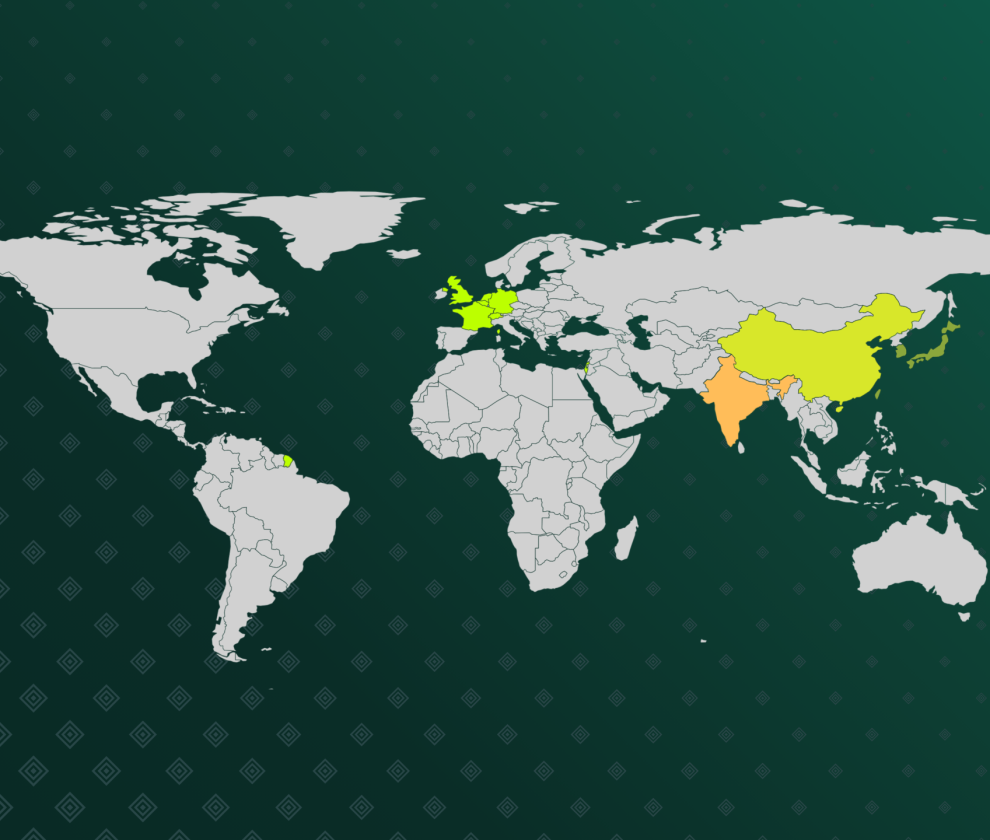
This opening line captures the central argument of a book that thoughtfully reconsiders the changing nature of global power today. Peter Frankopan uses the phrase to frame a larger argument about how power is being reorganised in the twenty-first century. He asks readers to look beyond familiar Western reference points and pay attention to where capital, diplomacy, technology, logistics, and political influence are increasingly concentrated. The answer, in his telling, is across Asia, with China at the centre of the most consequential shift.
What makes the book compelling is that it does not rely on grand slogans. Instead, it follows the movement of money, energy, data, debt, commodities, and statecraft. That method has made the book age well. In a moment when supply chains are fragile, sanctions regimes are expanding, Red Sea shipping has been disrupted, and competition over semiconductors and critical minerals has intensified, Frankopan’s central question feels even sharper: who is building the systems through which tomorrow’s world will operate?
Book Summary
At its core, The New Silk Roads examines the re-emergence of Asia as a primary theatre of global economic and geopolitical activity. Frankopan describes how trade networks, energy routes, infrastructure corridors, sovereign lending, and diplomatic partnerships are steadily altering the balance that once favoured the Atlantic world.
Many reviewers praised the book for presenting this transformation in an accessible and panoramic way, especially its ability to interpret globalisation from a Eurasian vantage point rather than a purely Western one. The Guardian noted that the book offers a concise illustration of eastward economic gravity and the strategic implications that accompany it. Yet the book is more than a catalogue of ports and railways. It is fundamentally about state capacity and ambition.
Frankopan shows how China has paired industrial strength with overseas financing, diplomatic persistence, and long-term planning. China’s Belt and Road Initiative is examined beyond a political rhetoric and rather as a material fact that a network of railway corridors threading through Kazakhstan and Central Asia, port stakes from Gwadar to Piraeus, pipelines running across Turkmenistan and Myanmar, and financial instruments binding recipient nations to a long-term strategic architecture. Frankopan presents all of this with the detachment of a cartographer charting new terrain.
The book does not invite readers to admire or to fear the shift it documents. It makes a more demanding request: that its audience actually pays attention to where the scaffolding of the emerging global order is being erected, and by whom.
That quality of disciplined observation allows Frankopan to move beyond familiar geopolitical binaries through which power is exercised and sustained in the world.
Some critics argued that Frankopan may understate enduring Western military and institutional advantages, particularly those of the United States. That criticism is fair and worth considering. But it does not diminish the book’s larger value: it captures how influence today is increasingly exercised through infrastructure, finance, market access, and connectivity rather than through military posture alone.
What the Book Sees So Clearly About Energy and Power
One of the most prominent aspects of The New Silk Roads is the clarity with which it explains the relationship between energy flows and geopolitical leverage. Frankopan repeatedly returns to chokepoints, pipelines, reserves, and shipping lanes because they determine national resilience.
His discussion of the Strait of Hormuz now feels especially relevant. Recent tensions affecting maritime trade routes, alongside earlier Red Sea disruptions, have reminded governments that narrow waterways can move markets, alter freight costs, and reshape diplomacy almost overnight. Countries dependent on imported fuel understand this immediately as approximately one-fifth of the world’s oil supply and the majority of Qatar’s liquefied natural gas exports transit this corridor. To threaten it is to threaten the industrial metabolism of China, Japan, South Korea, and India simultaneously.
Frankopan also helps explain why China invested so heavily in overland alternatives, strategic petroleum reserves, diversified LNG suppliers, and continental transport links. These were not isolated economic choices. They were hedges against vulnerability.
Today, that same logic can be seen in the race for battery minerals, grid equipment, rare earth processing, and semiconductor supply chains. The map of power is no longer drawn only by oil fields. It now includes lithium basins, data cables, fabrication plants, and logistics hubs.
Why Reading It Changes How You Read the World
There are books that inform, and books that recalibrate perception. The New Silk Roads belong to the second category.
After reading it, ordinary headlines look different. A railway agreement in Kazakhstan, a port lease in Greece, a digital payment rollout in Pakistan, or a mining concession in Zambia no longer seem like disconnected stories. They become parts of a broader contest over networks, leverage, and future dependence.
That is perhaps the book’s most enlightening moment. Because it trains readers to see systems rather than episodes.
The West was narrating its own divisions. The East was quietly laying roads.
At a time when Anglo-American politics often turned inward, countries across the Silk Road region were engaged in a very different process: expanding partnerships, reinforcing corridors, and constructing the physical foundation of a revised international order. Frankopan does not exaggerate this contrast, but he does show how consequential it has become.
Why It Feels Even More Relevant Now
Published in November 2018, The New Silk Roads is now better read as a thesis to be tested against a rapidly shifting world. That shift makes the book more useful, not less: it allows its central claims to be examined against a sequence of geopolitical shocks that have reshaped global connectivity in practice rather than theory.
On its broad directional argument, Frankopan’s framing has largely held up. The pandemic exposed how concentrated and fragile global supply chains had become. The war in Ukraine reintroduced the strategic importance of overland corridors and territorial chokepoints. Escalating insecurity in the Red Sea has further underscored how dependent global trade remains on vulnerable maritime routes. At the same time, the emergence of initiatives such as the India–Middle East–Europe Economic Corridor reflects the very competition Frankopan anticipated: not simply over physical territory, but over the design, financing, and governance of connectivity itself. In this sense, the central debate has evolved less around whether infrastructure matters, and more around who gets to define its architecture and rules.
Yet a close rereading also reveals what the book underplayed, particularly in relation to China. Frankopan’s account leans toward a view of China as a strategically coherent, long-horizon actor steadily assembling the foundations of a new global order. The subsequent trajectory has been more uneven. China’s economy, rather than consolidating uninterrupted strength, has slowed markedly, with international institutions such as the IMF describing it as a drag on global growth in recent years. Domestic financial pressures have deepened, including a rapid rise in household debt relative to GDP between 2008 and 2023, alongside a sustained downturn in property markets across major cities that account for much of national output. The picture that emerges is of a state balancing external ambition with significant internal structural strain.
This complexity is also evident in the Belt and Road Initiative, which has proven far less linear than early interpretations suggested. Its challenges appear to stem less from deliberate strategic overreach and more from fragmented execution across state-owned enterprises, policy banks, and local authorities, often with misaligned incentives and uneven risk assessment. Several flagship projects illustrate this gap between ambition and outcome. The Jakarta–Bandung high-speed rail, for instance, opened in 2023 with daily ridership far below initial projections, shaped in part by high fares and limited integration with urban transport networks. Meanwhile, countries such as Italy and Panama have formally exited or distanced themselves from the initiative in recent years, citing limited tangible benefits. The result is not a collapse of the BRI, but a more ambiguous reality: a sprawling infrastructure agenda that is unevenly delivered, politically contested, and variably effective.
Finally, the book also underestimated the scale and speed of the Western policy response. Measures such as the US CHIPS and Science Act and the Inflation Reduction Act, alongside coordinated efforts in Europe to reshore critical supply chains in semiconductors and clean energy technologies, signal a more interventionist industrial strategy than the book anticipated. Far from passively adapting to shifts in global production networks, Western economies have demonstrated a renewed capacity to actively reshape them when political consensus allows. This has introduced a new layer of competition not just over routes and corridors, but over the industrial foundations that underpin them.
A Book Worth Recommending, and Returning To
What makes The New Silk Roads memorable is that it combines readability with strategic usefulness. Frankopan writes clearly, thinks broadly, and consistently links events that others treat separately.
It is not flawless. At times it moves quickly across complex regions, and some reviewers felt it gave insufficient weight to countervailing forces. But even critics often acknowledged the scale of its ambition and the usefulness of its framing.
For professionals working on global trade, energy markets, geopolitical risk, scenario planning, or regional strategy across the MENA, Central Asian, South Asian, and Indo-Pacific contexts, this is not simply an interesting read. It is an illuminating one. Frankopan offers a way of seeing the world that is at once historically informed and strategically useful.
In that sense, the enduring achievement of The New Silk Roads is not that it anticipated every detail of the present moment. It is that it understood the direction in which the world was moving and gave readers a vocabulary for making sense of that movement. The world it described no longer feels emergent. It feels present.